






How the European GSR Regulation Impacts Truck Camera Systems?
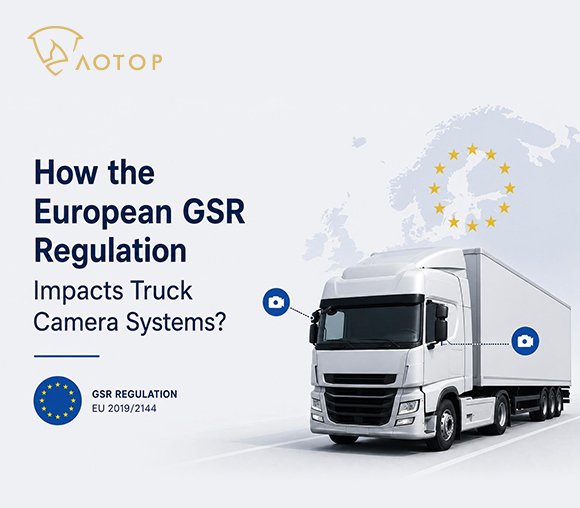
European road safety policy is steadily raising expectations for how well heavy vehicles manage blind spots, reversing risk, and vulnerable road user (VRU) protection. The EU’s General Safety Regulation (GSR) doesn’t mandate one specific camera brand or architecture, but it does move camera- and sensor-based visibility aids from “nice to have” toward “expected baseline.” For OEMs, suppliers, and fleets, that shift changes specification decisions, validation effort, and retrofit priorities. Industry or Regulation Background The EU General Safety Regulation (GSR) refers to Regulation (EU) 2019/2144, a type-approval framework that introduces mandatory safety technologies in phases. The European Commission summarises that the revised regulation applies from July 2022 for new vehicle types and extends to […]
2026 Commercial Vehicle Safety Camera System Regulations
A practical, compliance-first overview of how EU, UNECE, UK and U.S. rules shape commercial vehicle camera systems heading into 2026.
Why is My Backup Camera Not Working? Common Causes and Fixes
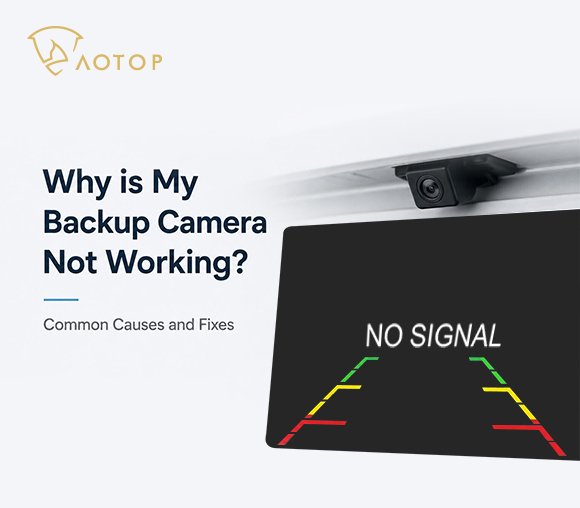
1. Introduction In commercial vehicles, a backup camera failure is more than an inconvenience. A black screen or “no signal” during backing can slow dock operations, increase spotter use, and raise incident risk—especially with trailers, liftgates, and tight yard geometry. To troubleshoot efficiently, think of the system as a chain: power and ground → reverse trigger → video path → monitor or processing. The same symptom can come from different links, so start with quick symptom checks, then verify power and wiring before replacing parts. 2. Quick Symptom Guide (What You See Matters) Use the symptom to narrow the most likely fault: Black screen or monitor off: monitor power, camera power, […]
What is a Vehicle CCD Camera, and How Does It Compare to CMOS?
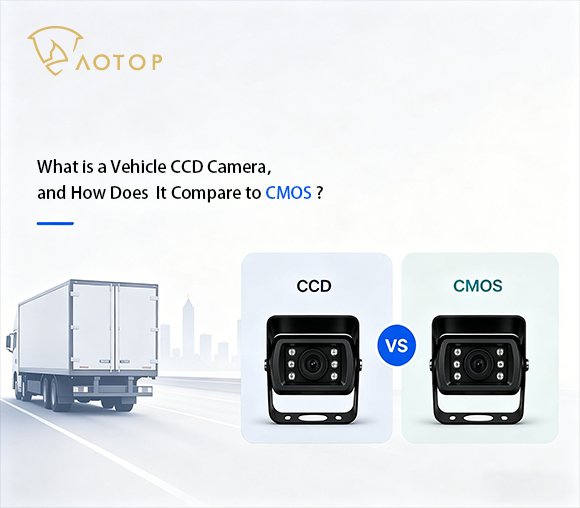
Reversing a truck, trailer, RV, forklift, or machine is often a “can’t-see-what-you-can-hit” problem. Mirrors help, but they can’t show every angle at once—especially close to the bumper, along the passenger side, or at a trailer’s far end. That’s why many operations add a commercial vehicle camera system to reduce blind spot risk during backing, turning, and tight maneuvering. If you’re researching the keyword vehicle CCD camera, you’re likely comparing sensor types for a rear view camera or full multi-camera setup. CCD is older than CMOS, but it still shows up in heavy-duty rear monitoring because the job conditions (low light, vibration, weather) are unforgiving. The Real Visibility Problem: Where Blind Spots Appear In day-to-day work, blind areas […]
UNECE R46 Explained: Camera Monitor System for Commercial Vehicle
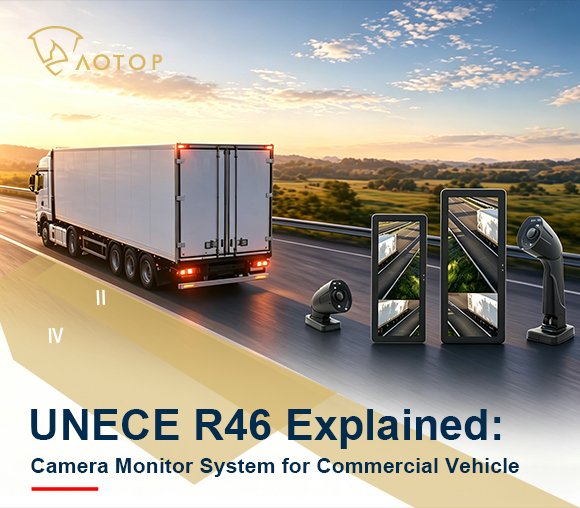
Commercial vehicles have relied on exterior mirrors for indirect vision for decades, but mirror coverage is constrained by vehicle geometry and fixed mounting points. For fleets and OEM teams evaluating a camera monitor system (CMS) as a mirror replacement, UNECE Regulation No. 46 (UN ECE R46) is a core reference because it defines type-approval requirements for devices for indirect vision. In everyday operations, the most persistent visibility challenges are typically concentrated near the A-pillar, along long trailer sides, around rear corners during turns, and close to the wheels during low-speed maneuvers. In rain, glare, and crowded yards, the issue is often not whether an object is visible, but whether the driver can interpret position and […]
Why Forklifts Need a Camera on the Fork Arm?
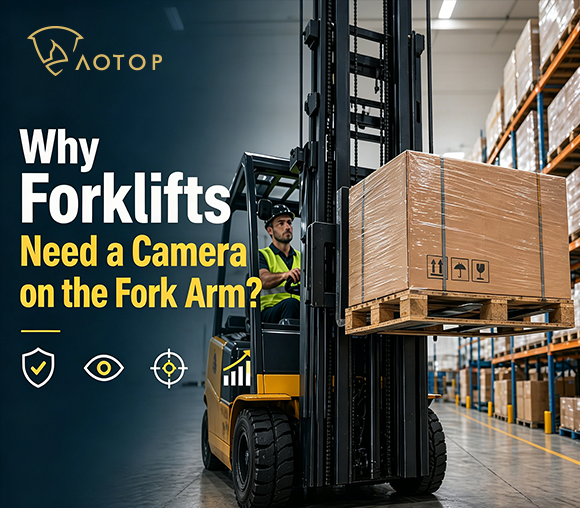
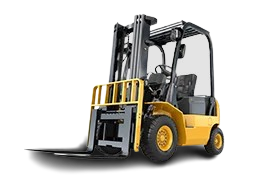
A forklift’s most dangerous blind spot isn’t behind the truck—it’s right in front of the forks. When a load is raised, stacked, wrapped, or oversized, the operator’s natural line of sight is blocked by the cargo, the mast, and the carriage. The truck may still be moving forward, but the driver can’t clearly see what the forks are approaching: pallet edges, rack beams, products, pedestrians, or uneven ground. Key Takeaways: A fork-arm camera restores the missing front view created by the load. It reduces guesswork during everyday handling, helping prevent low-speed impacts, pallet damage, and rack strikes—problems that typically happen during forward approaches, not just when reversing. The Real Front Blind Spot is Created […]
What Does Rear View Camera Delay Actually Mean?
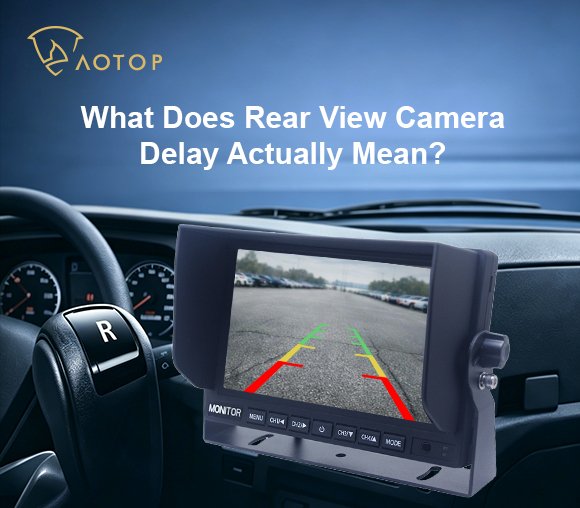
Key Takeaways “Rear view camera delay” can describe a problem (the image appears late after you shift into Reverse) or a feature/control (rear camera delay control keeps the rear view on briefly after shifting out of Reverse). If the image is late to appear, treat it as safety-relevant: you lose rear visibility right when the vehicle may start moving. Common causes include a dirty/fogged lens, wiring or power/ground issues, a weak reverse “trigger” signal, or display software glitches. If the image stays on after you shift to Drive, it may simply be a configurable delay feature that helps during multi-point maneuvers. Rear View Camera Delay: Two Meanings That Get Mixed Up In everyday use, “rear view […]
Why Backup Camera Flickering Interference When Engine Running?
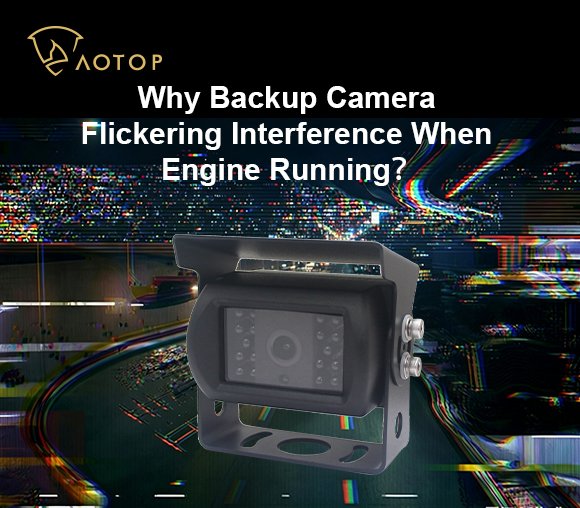
If your reverse/backup camera image looks normal with the ignition on (before the engine starts), but begins to flicker, show rolling lines, or turn into “snow” once the engine is running, the cause is usually electrical noise introduced by the charging system—or interference picked up by the power and video wiring. The good news: most cases can be diagnosed in under an hour with a simple, safe process. Key Takeaway: Engine-running-only flicker usually points to power supply noise (alternator ripple), PWM on the reverse-light circuit, a ground loop, or cable routing/shielding problems—not a “bad camera” right away. Quick Symptom-to-Cause Map Use this as your first filter: Rolling lines (horizontal bars that drift or […]
What is AI Detection in Vehicle Camera Systems?
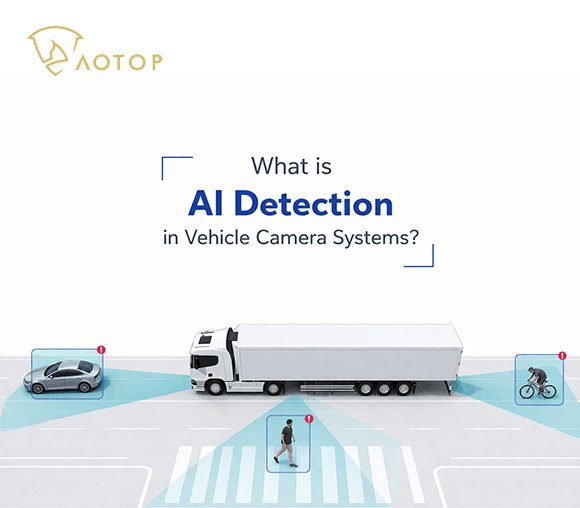
Regular in-vehicle camera system are passive: they show a live view and the driver has to notice risk. AI detection in vehicle camera systems makes the camera feed actionable. AI can recognize objects (such as pedestrians or vehicles), check whether they enter a defined “risk zone,” and trigger audible/visual warnings. This shift from image display to risk recognition is why AI-enabled camera systems are becoming a serious safety tool for commercial fleets operating in dense cities, busy yards, and job sites. What Does “AI Detection” Mean in a Vehicle Camera System? AI detection means computer-vision software analyzes live video and answers questions like: “Is there a person behind the vehicle right now?” “Is a vehicle entering […]