

Why Does a Vehicle LCD Monitor Respond More Slowly in Cold Weather?
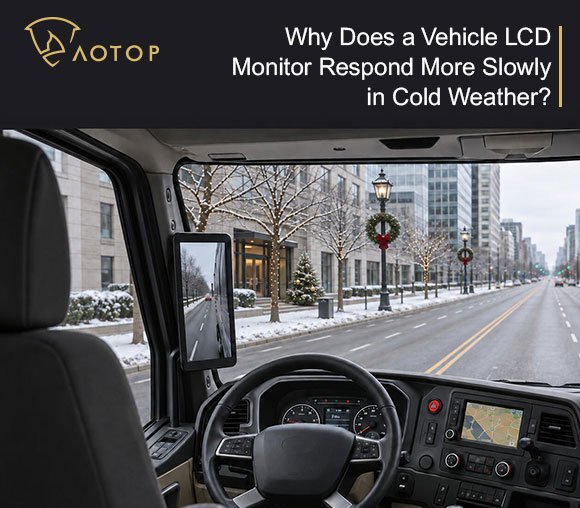
A vehicle LCD monitor responds more slowly in cold weather because lower temperatures make the liquid crystal material inside the screen more resistant to changes in orientation. As a result, pixels take longer to change brightness. On a truck’s digital mirror, a parked vehicle may look sharp while a passing car leaves a faint trail. The difference becomes visible whenever the screen has to update the brightness of many pixels in quick succession. Research on low-temperature LCD response What Happens Inside an LCD Panel as It Gets Colder? An LCD forms an image by controlling how much light from a backlight passes through each pixel. The display applies a voltage […]
H.264 ビデオ圧縮とは何か、そしてその仕組みはどのようなものですか?
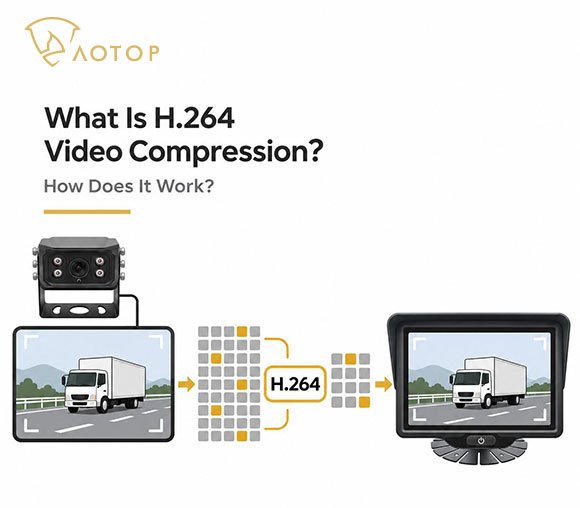
H.264 video compression reduces the amount of data needed to store and transmit video while preserving useful image detail. Also known as Advanced Video Coding (AVC), it helps DVR systems balance recording quality, storage capacity, and bandwidth requirements. For commercial vehicles, that balance matters throughout the working day. Trucks, buses, and work vehicles may use several cameras to record different views during driving, reversing, and maneuvering. H.264 helps manage the resulting video data so recordings remain practical to store, retrieve, and review. What is H.264 Video Compression? H.264 is a video coding standard also called MPEG-4 Part 10 or AVC. It defines how compressed video is represented so compatible equipment […]
AOTOPとIBE Intermobility Future Ways 2026
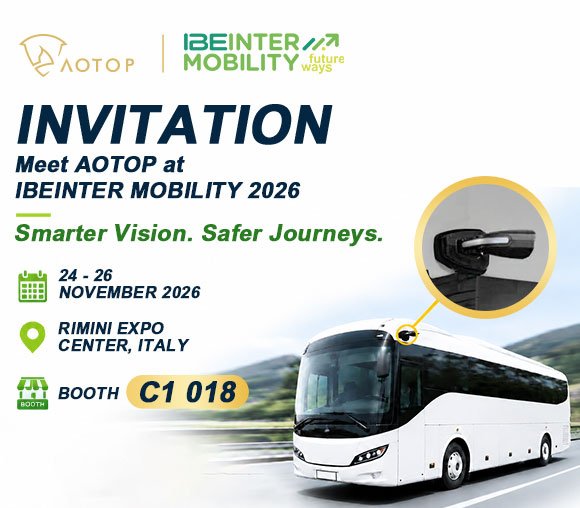
Exhibition Preview | IBE Intermobility Future Ways 2026 From November 24 to 26, AOTOP will exhibit at IBE Intermobility Future Ways in Rimini, Italy. The event brings together professionals from the bus, coach and public transport sectors. At the show, we’ll present AOTOP’s vision and safety solutions for buses and coaches, including UNECE R46 digital mirror system (CMS), 360° surround view system and active AI detection systems etc. If you’re planning to attend IBE Intermobility Future Ways, we invite you to visit us at Booth C1 018. Come meet our team and let’s discuss your next vehicle safety project! 📅 November 24–26, 2026 📍 Rimini Expo Centre, Italy 📌 Booth【C1 […]
有線バックアップカメラをワイヤレスに変換できますか?
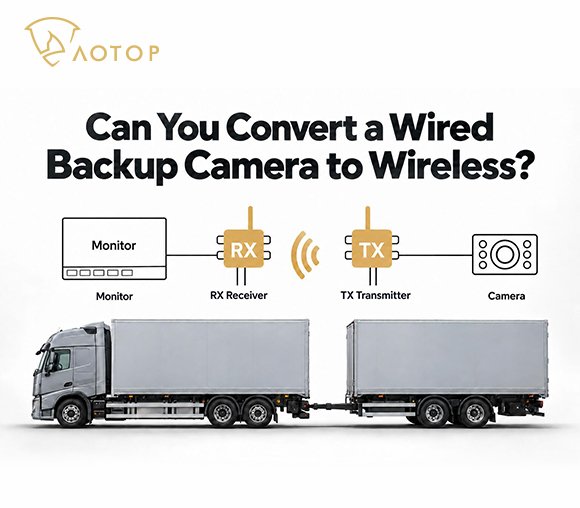
Yes, you can convert a wired backup camera to wireless by adding a compatible video transmitter and receiver. The transmitter sends the camera’s video signal wirelessly to a receiver connected to the monitor, replacing the long video cable between the rear of the vehicle and the dashboard. However, wireless conversion does not mean every cable disappears. The camera, monitor, and wireless modules still need power. Whether the conversion works well depends on video compatibility, vehicle size, signal conditions, and how the existing camera system operates. Why Do Vehicle Cameras Produce Noise at Night? A wired backup camera normally sends video through a cable running from the camera to the display. […]
AOTOP at SEMA Show 2026
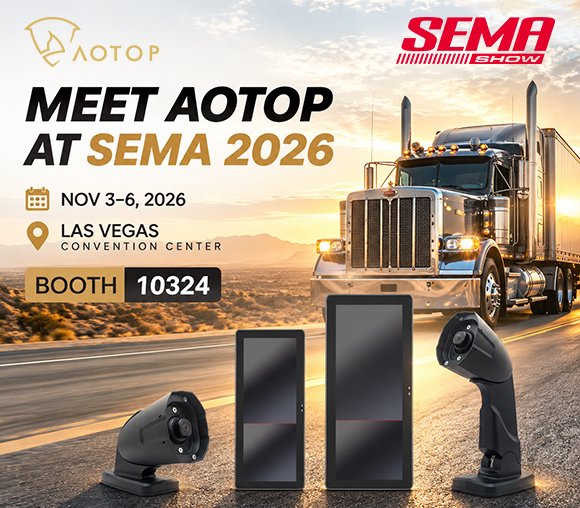
AOTOP Exhibition Preview | SEMA Show 2026 We’re excited to exhibit once again at SEMA Show in Las Vegas this November! We’ll be showcasing our latest vehicle vision and safety solutions, including UNECE R46 camera monitor systems, active AI recognition systems, IP camera & NVR systems and 360° surround view systems etc. We look forward to reconnecting with long-standing partners and welcoming new customers at the show. Las Vegas Convention Center November 3–6, 2026 Booth 10324 Planning to attend? Schedule a meeting with us in advance to discuss your next vehicle safety project. See you in Las Vegas!
What is 3D Noise Reduction in a Vehicle Camera?
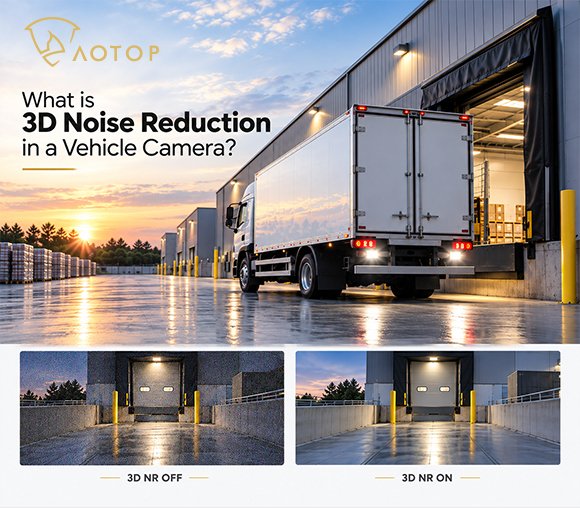
3D noise reduction in a vehicle camera is an image-processing technique that uses information across consecutive video frames to reduce random image noise. Often called 3D DNR or 3DNR, it helps clean up grainy low-light footage while attempting to preserve useful image details. This technology is particularly relevant to reversing cameras and vehicle monitoring cameras operating at night. It can make dark scenes look cleaner, although excessive filtering may soften details or create trails around moving objects. The “3D” refers to image width, image height, and time. It does not mean the camera captures depth or produces three-dimensional images. Why Do Vehicle Cameras Produce Noise at Night? Vehicle cameras produce […]
What is the Difference Between PAL and NTSC in Vehicle Camera Systems?
The main difference between PAL and NTSC in conventional vehicle camera systems is image format and video timing. PAL typically uses 25 frames per second and a common digitized image of 720 × 576, while NTSC uses approximately 29.97 frames per second and 720 × 480. For installation, the camera’s output must match the monitor or recorder’s supported input. The distinction becomes more complicated with AHD cameras, where suppliers may use PAL and NTSC to describe frame-rate modes at the same HD resolution. Understanding both uses helps explain why a replacement camera may fit the existing connector but still produce a black screen. What Do PAL and NTSC Mean in […]
AOTOP National Day Holiday Notice 2026
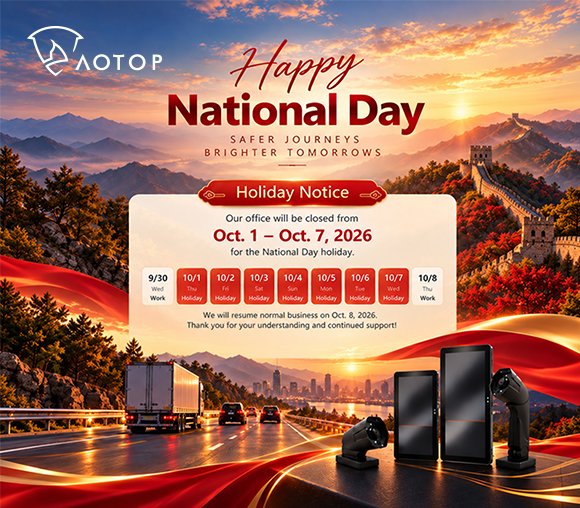
During the National Day holiday, our holiday schedule is as follows: October 1st to October 7th, 2026, all employees will be on holiday. If you have any questions or inquiries during this period, please feel free to contact us. We will get back to you as soon as possible. We will resume normal operations on October 8th, 2026. Thank you for your understanding and continued support!
What is Field of View (FOV) in a Vehicle Camera?
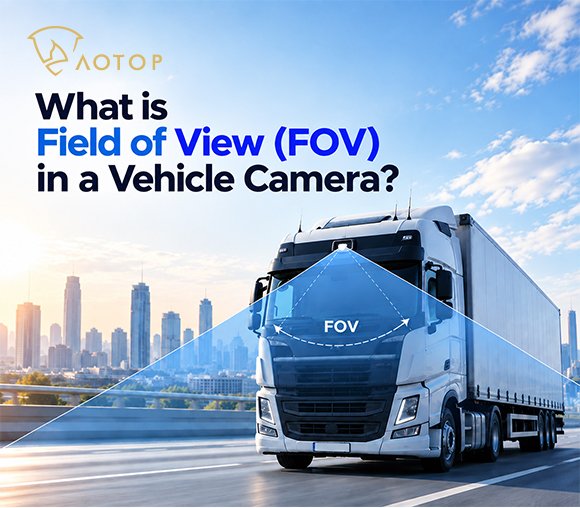
Field of view (FOV) in a vehicle camera is the angular extent of the scene captured by the camera, measured in degrees. It determines how much of the area behind, beside, or ahead of a vehicle appears in the image. For trucks, buses, delivery vans, and industrial vehicles, FOV influences the coverage available for reversing, maneuvering, and monitoring surrounding traffic. Choosing an appropriate viewing angle requires balancing scene coverage, object detail, and installation geometry. How is Vehicle Camera FOV Measured? Vehicle camera FOV is measured horizontally, vertically, or diagonally. Each measurement describes a different dimension of the image, so buyers should compare specifications using the same direction. Measurement Definition Practical […]
 English
 日本語
 Deutsch
 Français
 Italiano
 Español de Argentina
 Español de Chile
 Español de México
 ਪੰਜਾਬੀ
 한국어
 Türkçe
 Русский
 Português
 Nederlands (België)
 Polski