

What is H.264 Video Compression, and How Does It Work?
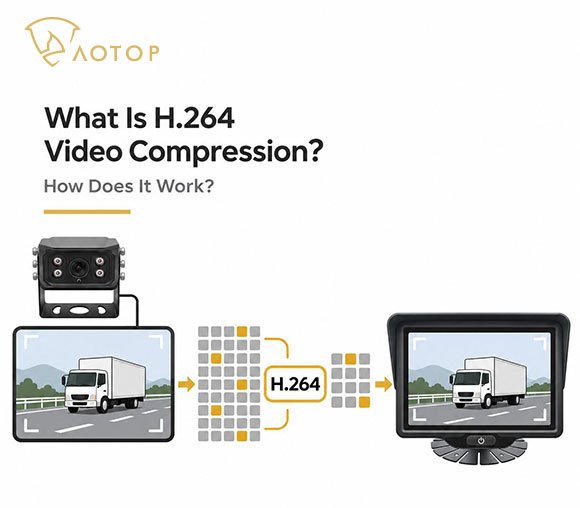
H.264 video compression reduces the amount of data needed to store and transmit video while preserving useful image detail. Also known as Advanced Video Coding (AVC), it helps DVR systems balance recording quality, storage capacity, and bandwidth requirements. For commercial vehicles, that balance matters throughout the working day. Trucks, buses, and work vehicles may use […]
AOTOP at IBE Intermobility Future Ways 2026
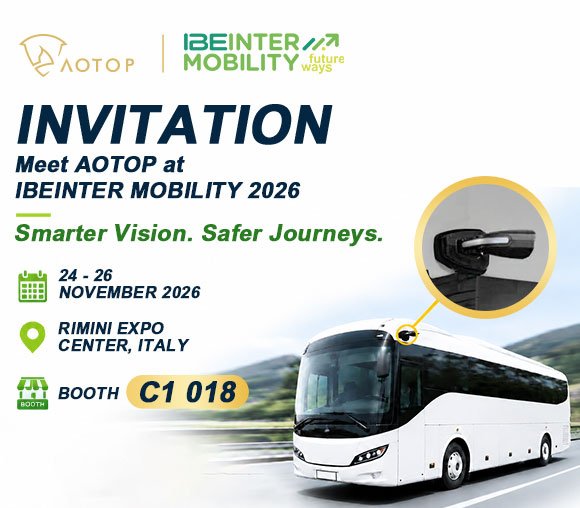
Exhibition Preview | IBE Intermobility Future Ways 2026 From November 24 to 26, AOTOP will exhibit at IBE Intermobility Future Ways in Rimini, Italy. The event brings together professionals from the bus, coach and public transport sectors. At the show, we’ll present AOTOP’s vision and safety solutions for buses and coaches, including UNECE R46 digital […]
Can You Convert a Wired Backup Camera to Wireless?
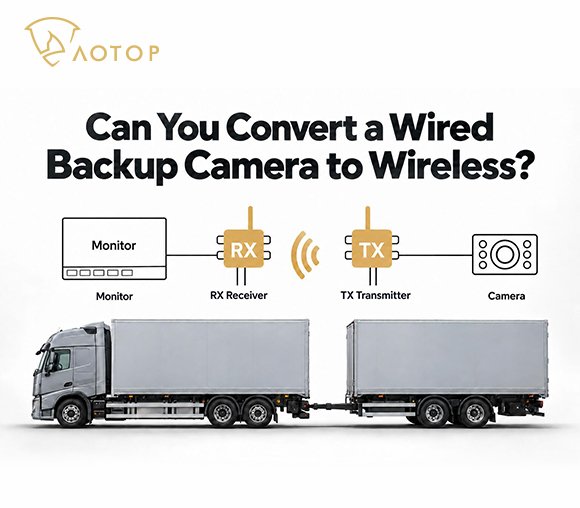
Yes, you can convert a wired backup camera to wireless by adding a compatible video transmitter and receiver. The transmitter sends the camera’s video signal wirelessly to a receiver connected to the monitor, replacing the long video cable between the rear of the vehicle and the dashboard. However, wireless conversion does not mean every cable […]
AOTOP at SEMA Show 2026
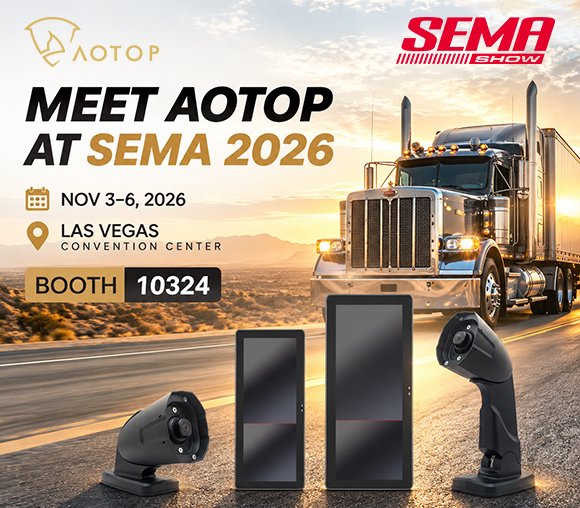
AOTOP Exhibition Preview | SEMA Show 2026 We’re excited to exhibit once again at SEMA Show in Las Vegas this November! We’ll be showcasing our latest vehicle vision and safety solutions, including UNECE R46 camera monitor systems, active AI recognition systems, IP camera & NVR systems and 360° surround view systems etc. We look forward to […]
What is 3D Noise Reduction in a Vehicle Camera?
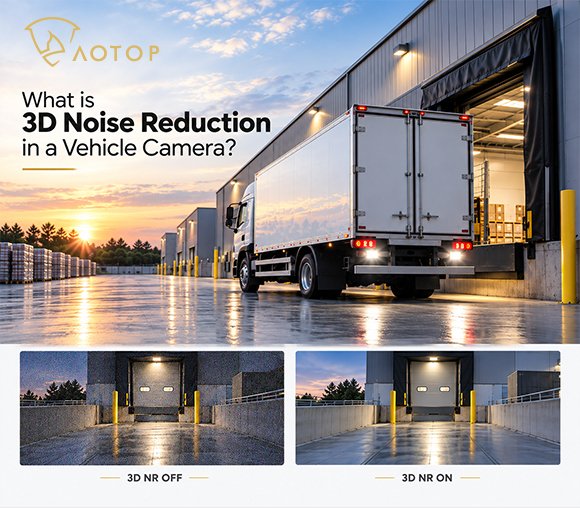
3D noise reduction in a vehicle camera is an image-processing technique that uses information across consecutive video frames to reduce random image noise. Often called 3D DNR or 3DNR, it helps clean up grainy low-light footage while attempting to preserve useful image details. This technology is particularly relevant to reversing cameras and vehicle monitoring cameras […]
What is the Difference Between PAL and NTSC in Vehicle Camera Systems?
The main difference between PAL and NTSC in conventional vehicle camera systems is image format and video timing. PAL typically uses 25 frames per second and a common digitized image of 720 × 576, while NTSC uses approximately 29.97 frames per second and 720 × 480. For installation, the camera’s output must match the monitor […]
AOTOP National Day Holiday Notice 2026
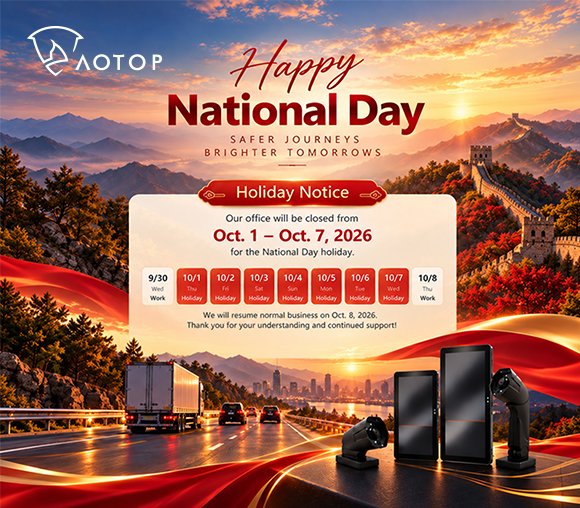
During the National Day holiday, our holiday schedule is as follows: October 1st to October 7th, 2026, all employees will be on holiday. If you have any questions or inquiries during this period, please feel free to contact us. We will get back to you as soon as possible. We will resume normal operations on […]
What is Field of View (FOV) in a Vehicle Camera?
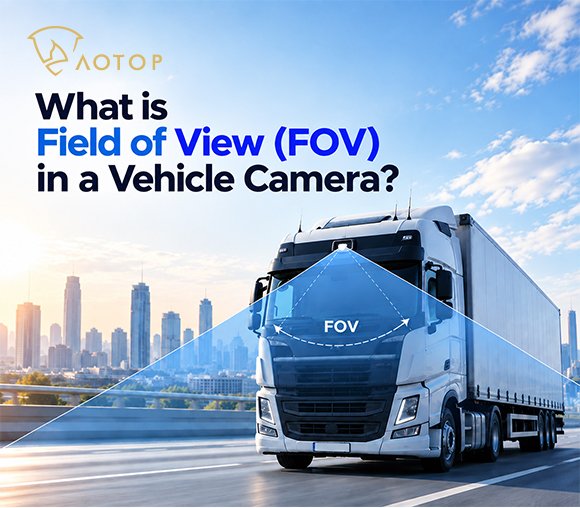
Field of view (FOV) in a vehicle camera is the angular extent of the scene captured by the camera, measured in degrees. It determines how much of the area behind, beside, or ahead of a vehicle appears in the image. For trucks, buses, delivery vans, and industrial vehicles, FOV influences the coverage available for reversing, […]
What is a Trigger Wire on a Vehicle Monitor?
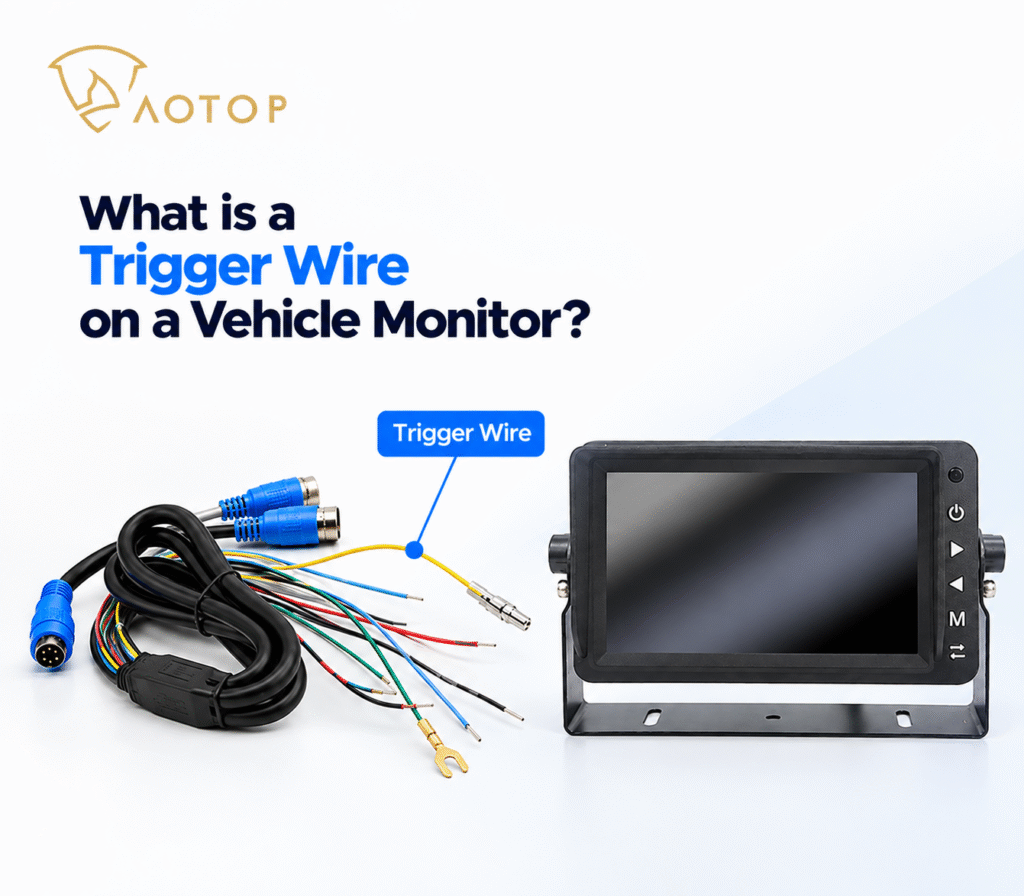
A trigger wire on a vehicle monitor is a control wire that receives an electrical signal and tells the monitor to display a specific camera channel automatically. It connects a vehicle action, such as reversing or turning, with the camera view the driver needs. For trucks, buses, RVs, and other commercial vehicles, automatic switching reduces […]