
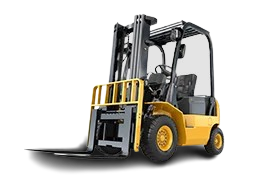
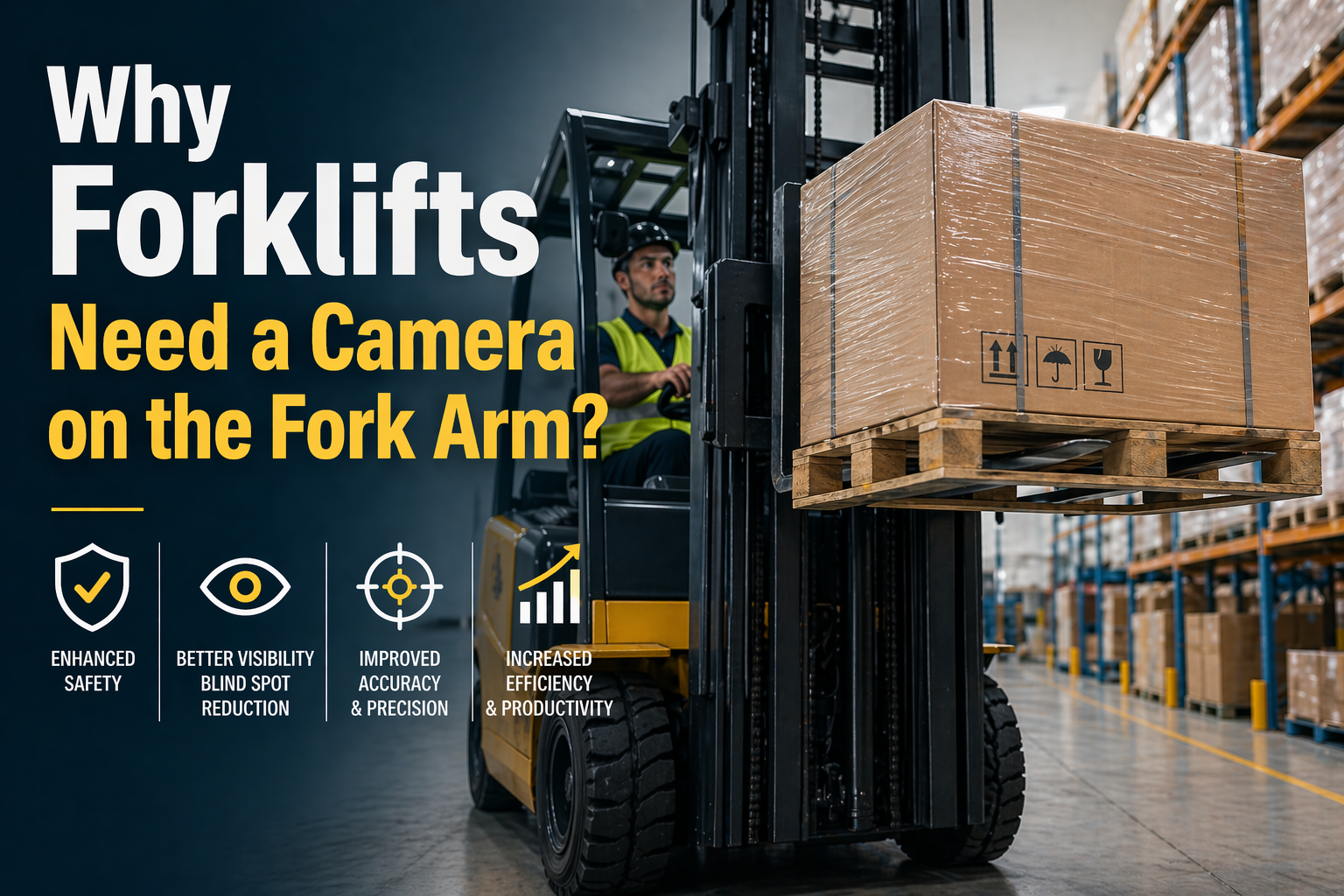
A forklift’s most dangerous blind spot isn’t behind the truck—it’s right in front of the forks.
When a load is raised, stacked, wrapped, or oversized, the operator’s natural line of sight is blocked by the cargo, the mast, and the carriage. The truck may still be moving forward, but the driver can’t clearly see what the forks are approaching: pallet edges, rack beams, products, pedestrians, or uneven ground.
Key Takeaways: A fork-arm camera restores the missing front view created by the load. It reduces guesswork during everyday handling, helping prevent low-speed impacts, pallet damage, and rack strikes—problems that typically happen during forward approaches, not just when reversing.
The Real Front Blind Spot is Created By the Load
Unlike trucks or vans, a forklift doesn’t have a big hood blocking the operator’s view. The structure is relatively open. The real visibility problem comes from what you’re carrying.
Once a pallet is lifted, several things happen at the same time:
-
The load blocks forward vision, especially with tall, wrapped, or oversized cargo.
-
The mast and carriage block diagonal vision, hiding the fork tips and the space immediately ahead.
-
The forks extend beyond what the operator can judge from a seated position, especially when approaching racking.
-
The operator is forced to rely on guesswork while still moving forward.
That’s why you’ll see experienced drivers lean sideways, crane their neck, or inch forward with micro-adjustments when stacking at height. Those behaviors aren’t “bad habits”—they’re compensation for a missing front view.
What Goes Wrong When the Operator Can’t See
Most warehouse forklift incidents don’t look dramatic. They’re low-speed events during normal handling—exactly when the operator is approaching a rack face, a stack, or a pallet on the floor.
When forward visibility is reduced, common outcomes include:
-
Pallets pushed into racking or clipped on entry
-
Products crushed due to misalignment
-
Rack beam or upright impacts
-
Forks entering pallets at the wrong angle, damaging stringers
-
Pedestrians or obstacles hidden by the load in the travel path
-
Slow, hesitant operation that reduces throughput
These are visibility problems first. Skill helps, but skill can’t see through cargo.
Why Mirrors and Reversing Cameras Don’t Solve it
Mirrors improve general awareness and help at intersections. Rear cameras help when backing up. But neither tool shows what matters during the forward approach:
Fork tip position
Pallet alignment relative to rack beams
Clearance between the load and nearby obstacles
What is directly under or in front of the forks
In other words, they don’t solve the front blind spot created by the load.
Why the Camera Must Be on the Fork Arm
Mounting location is the difference between “another camera” and a camera that actually solves the problem.
A camera on the overhead guard or truck body still suffers from the same obstruction: the load sits in front of it. The view disappears the moment the operator carries tall cargo or raises the pallet.
A fork-arm camera is mounted on the moving fork structure—typically the fork carriage or fork arm—so the lens looks from the same perspective as the forks. That placement keeps a usable view whether the load is low, high, wrapped, or oversized.
Where Fork-Arm Cameras Deliver the Most Value
Fork-arm cameras are especially helpful in operations where the load frequently blocks the operator’s sightline:
-
High-racking warehouses and high-lift stacking
-
Narrow-aisle operations where alignment tolerances are tight
-
Cold storage and low-light environments
-
Handling wrapped, bulky, or irregular loads
-
Busy facilities with mixed pedestrian traffic
The goal isn’t “monitoring.” It’s restoring the missing view so the operator doesn’t have to guess.
To see how fork-arm camera solutions are typically configured—from camera placement to in-cab display options—visit AOTOP’s Wireless Forklift Camera System and Safety Solutions page.
Frequently Asked Questions (FAQ)
Ⅰ.Is the Forklift’s Biggest Blind Spot Really in Front?
In many everyday handling situations, yes. The most critical visibility gap is often the space directly in front of the forks when the load, mast, and carriage block the operator’s line of sight during a forward approach.
Ⅱ.Why Not Mount the Camera on the Roof or Overhead Guard?
Because the load can still block the view. A roof-mounted camera often loses the fork-tip perspective once the pallet is raised or the cargo is tall. Mounting on the fork arm or carriage keeps the camera moving with the forks, so the view stays useful across different load heights.
Ⅲ.Do Mirrors or Reversing Cameras Make a Fork-Arm Camera Unnecessary?
They solve different problems. Mirrors and rear cameras help with rear awareness and intersections. They typically don’t show fork tip position, rack-beam clearance, or what’s directly under and in front of the forks during placement.
Ⅳ.Are Wireless Fork Cameras Practical in Warehouses?
Wireless setups are widely used because running cables to a moving mast assembly can be wear-prone. In practice, what matters is stable signal performance, battery management, and a routine check so the system is ready for each shift.
Ⅴ.What Maintenance Matters Most?
Keeping the lens clean and verifying the monitor view before work starts. In dusty, wet, or cold environments, a quick pre-shift wipe and a basic function check protect the value of the system.