




















When people ask “what are the latest 2026 commercial vehicle safety camera regulations?”, they usually mean: which rulebooks will actually be checked during approvals, permits, and roadside/enforcement reviews in the 2026 planning cycle. There still isn’t one single global camera mandate. Instead, the “latest” reality is that more jurisdictions and cities are tightening expectations around indirect vision, blind‑spot risk controls, and vulnerable road user protection—and camera systems are often the most practical way to demonstrate those outcomes.
Key Takeaways: Treat 2026 as a compliance planning window, not a universal switch date. Your job is to (1) identify the governing framework for each operating area, (2) document the field of view and driver information strategy you’re using to meet indirect-vision expectations, and (3) keep installation, inspection, and training evidence audit-ready. This is a practical overview, not legal advice—confirm details with local authorities and your type‑approval partners.
What Fleets and OEMs Should Standardize Now for Camera-System Compliance
If you need to defend camera-system compliance across audits, permits, and post‑incident reviews, the most useful approach is to standardize what you can prove—consistently—across vehicles and jurisdictions.
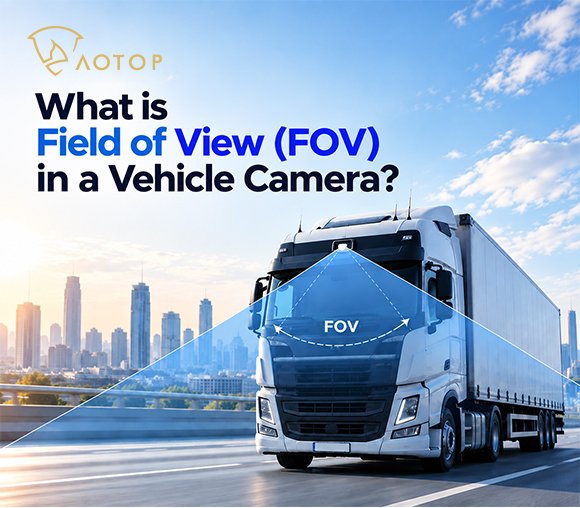
In real inspections, “Do you have cameras?” is rarely the question. The question is whether you can consistently show three things: coverage (what zones are visible), driver information (how the driver is expected to use displays/alerts), and ongoing control (how performance is checked over time).
A practical way to stay defensible is to build a small, repeatable compliance package per vehicle platform:
-
A jurisdiction and operating map (including city permit areas)
-
A coverage statement tied to vehicle geometry and use case
-
Installation evidence (photos, serial numbers) and an inspection routine with pass/fail criteria
-
A short driver HMI/training note that can be produced during audits or claims
With that baseline, you can adapt to EU type approval, UNECE-aligned approvals, and city-level permit schemes without rewriting your process every time.
EU: Type-Approval Requirements That Often Push Camera-Based Solutions
In Europe, the high-level umbrella is Regulation (EU) 2019/2144 (General Safety Regulation) *. It’s not written as a “camera law.” Instead, it drives a set of safety functions through type approval. For heavier vehicles with large nearside and front blind zones, cameras are frequently part of how those functions are delivered and demonstrated.
What to take away for 2026:
-
Treat camera coverage as part of a system compliance case (sensing + driver information + verification), not a bolt-on accessory.
-
Prepare for scrutiny on performance and evidence: what the driver can see, when they can see it, and how you keep that true over time.
UNECE: Regulation No. 46 is the Key Approval Pathway for Indirect Vision
In UNECE-aligned markets, the core route for camera-based indirect vision is UNECE Regulation No. 46 on indirect vision *. Put simply: it defines when a camera-monitor system can replace or supplement mirrors, and what installation/performance conditions must be met.
A practical compliance lesson: a CMS isn’t “compliant by default.” Whether you’re a fleet buying vehicles or an OEM building them, you should be able to answer three audit-friendly questions:
-
Which field(s) of view does the system cover, on this specific vehicle layout?
-
What happens in a fault condition (camera, power, display), and what is the driver expected to do?
-
What is your validation method after installation and during periodic checks?
UK: London’s DVS/PSS Shows How Permits Can Effectively Require Cameras
London is a clear example of how a city permit scheme can create camera requirements in day-to-day operations. Under Transport for London’s Direct Vision Standard (DVS), HGVs over 12 tonnes need a safety permit to operate in Greater London.
If a vehicle doesn’t meet the required vision rating, the Progressive Safe System (PSS) provides a retrofit route. TfL’s official guidance describes the requirements (including a nearside camera monitoring system): TfL DVS operator guidance *.
What to take away for 2026:
-
City rules can become the practical driver for camera deployments even when national rules are less explicit.
-
Permits live and die on evidence: installation photos, declarations, and certificates—not just “hardware present.”
United States: Mirrors Are Still the Regulatory Baseline
In the U.S., be careful with blanket claims like “there’s a federal camera mandate in 2026.” For most commercial motor vehicles, the baseline remains mirror-based under 49 CFR § 393.80 *.
That doesn’t make cameras irrelevant. Many fleets use them for safety, incident review, and operational visibility. But from a compliance standpoint, the first check is still straightforward: does this vehicle, in this configuration and operation, meet the applicable mirror/vision requirements? Then you can layer cameras as an enhancement or as part of a broader safety program where allowed.
Common Compliance Pitfalls Fleets and OEMs See in 2026 Planning
-
Treating “camera installed” as the finish line: auditors and permit reviewers care about coverage, driver information, and verification.
-
Keeping evidence in too many places: when documents are scattered, renewals and investigations become slow and error-prone.
-
Underestimating human factors: screens and alerts help only when drivers are trained and the HMI expectations are written down.
Practical tip: Build a one-page “compliance dossier” template per vehicle platform: operating/jurisdiction map, coverage statement, approval pathway, installation evidence checklist, inspection routine, and driver guidance. When a permit renewal or an incident happens, you’ll be glad it exists.
Next Steps Checklist
-
Confirm where each vehicle actually operates (countries and city permit areas).
-
For each area, separate mandatory requirements from approved alternatives.
-
Standardize evidence: installation records, certificates, and inspection logs.
-
Write down driver HMI expectations and training completion—and keep it retrievable.