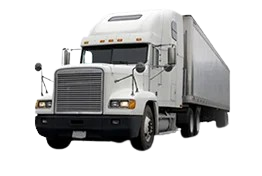

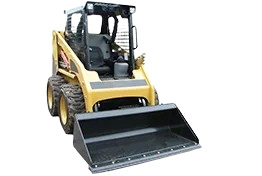
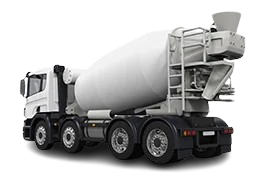
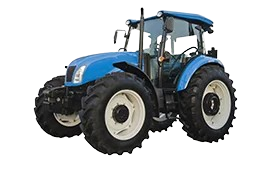
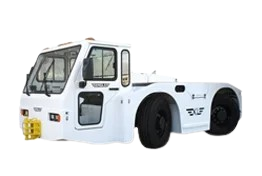
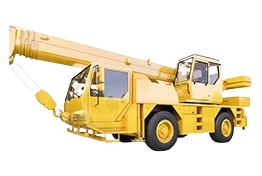
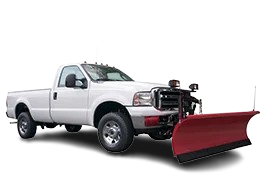
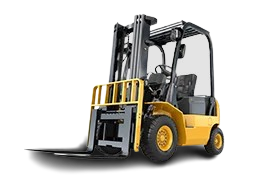
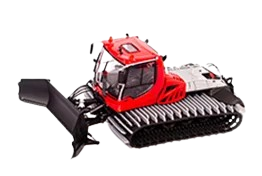
For fleet operators, the hardest moments aren’t the obvious ones. It’s the low-speed yard turn where a pedestrian steps into the side zone, the merge where a smaller vehicle sits in the blind spot, or the rain-and-road-spray night shift when visibility drops.
A microwave millimeter wave radar system helps by measuring distance and closing speed in conditions where cameras can struggle. Ultrasonic sensing still has a place—especially for very close, low-speed maneuvering.
Key Takeaway: Use a 77GHz mmWave radar system when you need reliable mid-range awareness and closing-speed data in all weather; use ultrasonic for precise near-field detection during slow parking and docking.
Quick Comparison: mmWave Radar vs Ultrasonic Sensing
Both technologies can reduce low-speed incidents and blind-zone surprises—but they do it in different “sweet spots.” Here’s the practical comparison fleet teams use when deciding what to install.
|
Criterion |
Millimeter-wave radar (mmWave) |
Ultrasonic sensing |
|---|---|---|
|
Signal type |
Radio waves (millimeter wavelengths) |
Sound waves (ultrasound) |
|
Best-fit speed range |
Low-to-high speeds (depends on radar setup) |
Low speeds only |
|
Best-fit distance range |
Mid-range to longer range (great for side/rear zones and approach detection) |
Near-field (close obstacles) |
|
What it measures well |
Distance + relative speed; can estimate direction depending on antenna design |
Distance (time-of-flight); limited directional detail |
|
Visibility dependence |
Works in darkness and most low-visibility conditions (rain/fog/spray) |
Works in darkness; performance can change with air conditions |
|
Typical commercial-vehicle use |
Blind spot monitoring, turning assist, rear cross-traffic style alerts, approach warnings |
Parking, docking to bays, very close maneuvering |
What is Millimeter-Wave Radar in Commercial Vehicles?
Millimeter-wave radar is radar operating at high radio frequencies with millimeter-scale wavelengths. In road vehicles, modern systems commonly use the 76–81 GHz range (often called 77 GHz automotive radar).
For commercial vehicles, mmWave radar is mainly used to measure how far objects are and how quickly the gap is closing—two inputs that directly support safe following and collision mitigation.
How mmWave Radar Works: the FMCW Radar Principle?
Most automotive mmWave systems use FMCW (Frequency-Modulated Continuous Wave) waveforms. The radar transmits a continuous signal whose frequency changes over time (a “chirp”), then compares what it sent with what it received.
Range from time delay
Reflections come back slightly delayed. By mixing the transmitted chirp with the received echo, the radar produces a “beat” signal whose frequency relates to the delay—and therefore distance. Signal processing separates multiple targets at different ranges.
Velocity from Doppler across chirps
If a target is moving toward or away from the radar, the echo contains a Doppler shift. By analyzing multiple chirps, the radar estimates relative velocity (closing speed).
Angle from antenna arrays
To estimate whether a target is left/right of center, radars use multiple antennas. The echo arrives with small phase differences across the array; decoding those differences yields direction (azimuth, and sometimes elevation).
What Positive Outcomes mmWave Radar can Enable in Commercial Vehicles?
For heavy vehicles, mmWave radar tends to deliver practical benefits that map to real operating risks.
1) Earlier awareness of closing speed
At highway speeds, small speed differences turn into fast closing rates. Radar directly measures relative velocity, which helps ADAS logic distinguish “something is ahead” from “we’re rapidly closing.”
2) More consistent sensing when cameras struggle
Commercial vehicles see night driving, low sun glare, and road spray as normal conditions. Radar doesn’t rely on ambient light, so it can keep providing core measurements when optical visibility is reduced.
3) Better coverage for large vehicle geometry
Long wheelbases and trailer articulation create challenging side and rear zones during turns and lane changes. mmWave radar configurations (short-, mid-, long-range) can be selected to cover different risk zones.
Pro Tip: Don’t evaluate radar only on maximum range. Evaluate performance in your highest-risk zone—often the 0–30 m region during merges, turns, and lane changes.
What to Look for in a Microwave Millimeter Wave Radar System
If you’re comparing radar systems for commercial vehicles, the decision usually comes down to coverage, tuning, and integration—not just “maximum range.”
Adjustable detection zone
Real fleets need different zones for different assets: a rigid truck in a city route isn’t the same as an articulated vehicle in a yard. Look for systems that let you set the detection length and width so alerts match your actual risk area.
For example, AOTOP’s 1080P 77GHz microwave millimeter wave radar system supports an adjustable detection area (up to 0–50 m length and 0–10 m width) and lets you configure the zone with a setup toolkit.
Detecting moving and stationary objects
In yards and congested stops, stationary obstacles (barriers, parked vehicles) can be just as risky as moving ones. A practical radar system should be able to detect both moving and motionless objects, then trigger alerts consistently.
Vehicle integration and signal robustness
On commercial vehicles, integration is where projects succeed or stall. CAN communication is commonly valued because it supports fast in-vehicle data exchange and can be more resistant to electrical noise compared with simpler wiring approaches.
All-weather reliability and support
If you’re buying radar to reduce incidents, validate it in the conditions that create incidents: rain, fog, spray, contamination, and night operations. Also check warranty and technical support—these systems live on vehicles for years, not weeks.
Ultrasonic Sensing in Vehicles: Principle and Best-fit Use Cases
Ultrasonic sensors emit short bursts of ultrasound and listen for echoes. This ultrasonic parking sensor principle relies on time-of-flight: the controller measures the delay between transmission and echo return to estimate distance.
Bosch describes ultrasonic sensors as emitting impulses and evaluating echo signals for close-range detection used in parking and maneuvering functions (see Bosch Mobility’s ultrasonic sensor overview).
Where ultrasonic performs well
Ultrasonic is typically a strong fit for parking assist and close, low-speed maneuvers where near-field precision matters.
Where ultrasonic tends to struggle
Because it’s sound-based, ultrasonic is limited in practical range and can be sensitive to environmental factors (air temperature/wind) and target properties (thin poles, angled surfaces, sound-absorbing materials).
Choosing mmWave Radar vs Ultrasonic for Fleet Operations
The quickest way to choose is to start from the moment you’re trying to prevent, then map it to speed and distance.
Choose mmWave radar when
Pick mmWave radar if any of these describe your operation:
-
You need awareness beyond near-field distances (for example, side zones during turns or approach detection).
-
You need closing-speed data to reduce “late” warnings and improve driver trust.
-
You operate in night shifts, rain, fog, or road spray where optical visibility drops.
-
You want a configurable detection zone so you can tune alerts to different vehicle types and routes.
Choose ultrasonic when
Ultrasonic is often the right tool when the vehicle is moving slowly and the target is very close:
-
Docking to bays and tight yard maneuvering
-
Parking and close obstacle detection where centimeters matter
Often, the best answer is both
Many fleets combine sensors: radar for mid-range awareness and speed-related risk; ultrasonic for near-field precision. The goal is simple: each sensor should work in the zone where it’s most reliable.
Warning: The biggest driver complaint is “cry wolf” alerts. Avoid choosing a sensor that can’t reliably cover your real risk zone—false alarms reduce adoption.