
Introduction
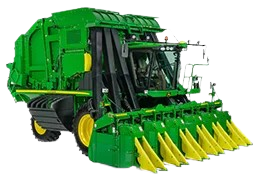
Harvesting is a coordination job as much as it is a cutting job. When a combine unloads on the move, backs into position, or works tight field edges, small visibility gaps turn into slower cycles, more spillage, and more near-misses around large moving equipment.
That’s why Wireless Camera Systems for Combine Harvesters are increasingly treated as operational tools—not accessories. The most useful setups don’t just add another view in the cab. They share the same view with the other machine that’s working alongside the combine.
Visibility Challenges During Harvesting Operations
A combine’s blind zones are built into the machine: high cabs, wide headers, long rear overhangs, and the unloading auger all limit line-of-sight. Real conditions make it tougher—dust and chaff, glare at sunrise/sunset, vibration, and frequent headland turns.
Common problem areas include:
-
Unloading alignment: The combine operator and grain cart operator need tight alignment while both machines are moving.
-
Rear visibility while reversing: Backing to clear an obstacle or reposition is still a risk point with mirrors alone.
-
Close-proximity zones: Areas near steps, corners, and the machine’s immediate sides can disappear from view.
-
Coordination gaps: One operator may see the grain stream, while the other is guessing based on radio calls.
A Farm Equipment Camera helps, but harvest work is rarely one-person/one-vehicle. If two machines must coordinate, two operators benefit from seeing the same thing at the same time.
What is a One-Camera Multiple-Display Wireless System?
In this article, “one-to-many wireless transmission” means one camera acts as the video source (transmitter) and broadcasts a live feed that multiple displays (receivers) can show simultaneously:
One Wireless Camera → Wireless Video Transmitter → Multiple Wireless Displays
This matters because it’s different from:
-
One camera + one display: only one operator gets the critical view.
-
Multiple cameras + multiple displays: more coverage, but more hardware, more pairing steps, and more install time.
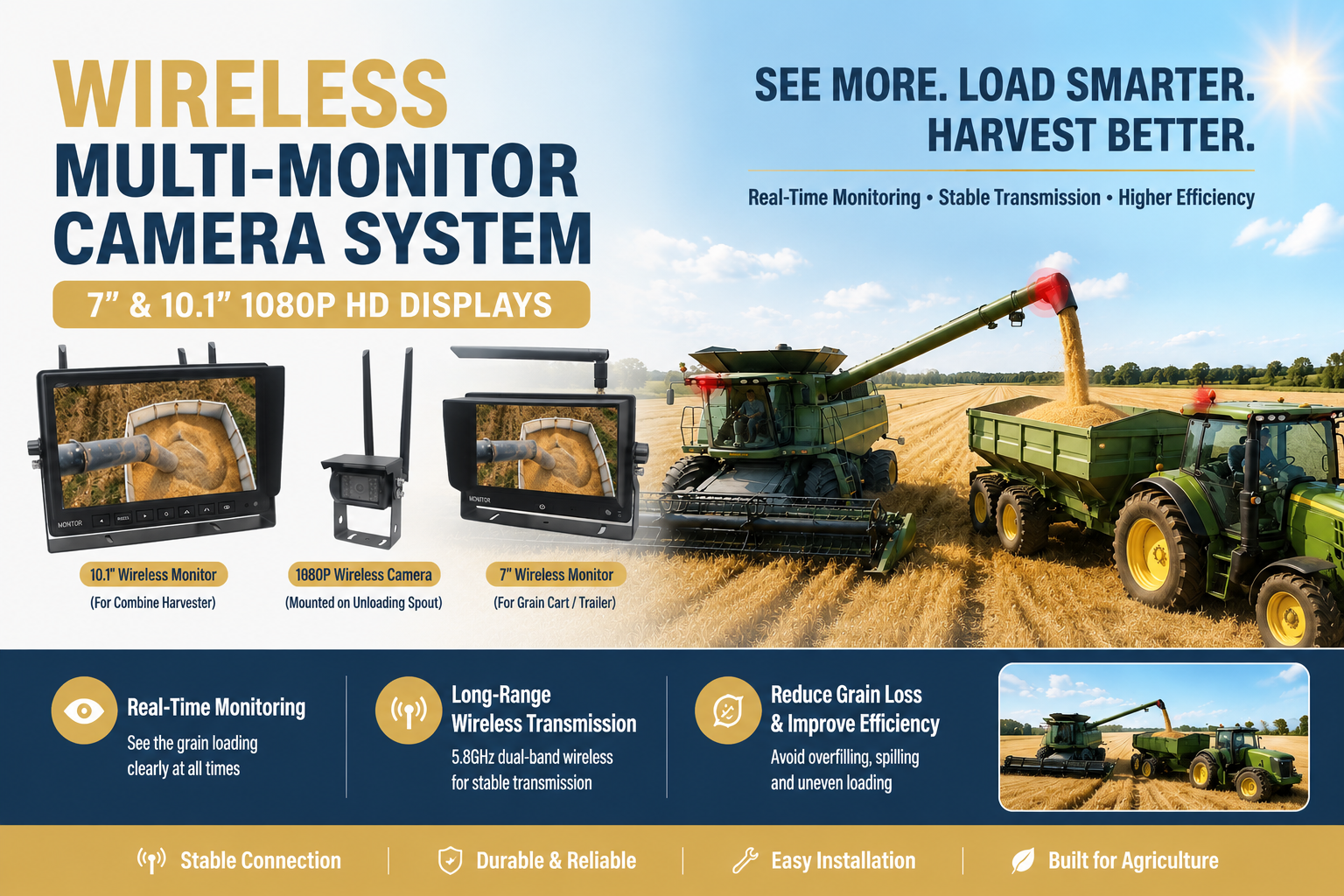
A Wireless Multi Monitor Camera System is designed for shared situational awareness: the combine cab and the grain cart/trailer can reference the same live frame instead of translating what they see into radio instructions.
How Wireless Camera Systems for Combine Harvesters Work?
A Combine Harvester Camera System built for one-to-many use typically includes:
-
A camera/transmitter mounted at the area you want to monitor (often the unloading zone).
-
Two or more receiver displays, each mounted where an operator can glance quickly (combine cab, grain cart tractor, support vehicle).
-
Power integration suited to agricultural equipment (commonly 12–24V), so you can move the kit across machines.
-
Pairing/reconnection behavior that supports real harvest workflows—different carts, different operators, seasonal swaps.
-
Aim for the decision zone. If the use case is unloading, the camera should show the spout and the receiving area together—not a wide “nice looking” shot.
-
Treat wireless as placement-dependent. Range and stability depend on where the camera and displays are mounted, line-of-sight, and what’s surrounding the machines.
Key Applications in Agricultural Equipment
One-to-many isn’t just for the combine operator. It’s a coordination tool across equipment.
-
Combine unloading → grain cart: Both operators can monitor where grain is landing and make quick adjustments without waiting for verbal back-and-forth.
-
Loading into a trailer or truck at the field edge: A shared view helps keep alignment steady and reduces stop-and-check delays.
-
Seasonal or swappable setups: A wireless multi-display kit can move to the machine that needs it this week when the fleet changes by season.
This is where an Agricultural Vehicle Camera System becomes less about “having a camera” and more about keeping a multi-machine process moving smoothly.
Benefits of Wireless Multi-Monitor Camera Systems
When one camera supports multiple displays, the benefits stack up in ways that matter during harvest.
-
Real-time wireless video sharing: Two operators can make the same call from the same picture.
-
Better field visibility where it counts: unloading zones, reversing, and tight maneuvering.
-
Reduced wiring complexity: fewer long cable runs across large machines and fewer routing headaches around pinch points and moving components.
-
Flexible installation: easier to deploy, reposition, and reconfigure for seasonal equipment.
Used correctly, this also supports an Agricultural Machinery Safety System approach: reducing blind-spot exposure during high-risk maneuvers without framing the system as surveillance.
Wireless vs Wired Camera Systems for Agricultural Machinery!
Wireless and wired systems both have a place.
Wireless is often a strong fit when you need portability, faster installation, or one camera view shared across multiple machines.
Wired is often a strong fit when the installation is permanent (OEM integration or long-term retrofit) and you want minimal sensitivity to RF conditions.
For many farms and OEM configurations, a hybrid setup makes sense: wired cameras for fixed viewpoints, plus a wireless one-to-many camera for the shared coordination view.
How to Choose the Right Wireless Camera Solution?
To select a practical solution, start from the workflow—not the feature list.
-
Define the use case (unloading, reversing, trailer loading). That determines placement and lens needs.
-
Confirm true one-to-many behavior. Some systems support multiple cameras but only one display; if your process needs two operators sharing one view, verify the camera can transmit to multiple receivers at the same time.
-
Check durability and power fit for farm environments: weather sealing, vibration tolerance, temperature range, and the power input range your machines use.
-
Plan for change. If equipment swaps are normal, pairing and re-pairing should be simple and consistent.
Conclusion
A modern Combine Harvester Camera System shouldn’t only add a view inside the combine cab. In harvest operations, the biggest gains often come from sharing the critical view with the other machine in the process.
One-to-many wireless transmission—one camera feeding multiple displays—supports better coordination between the combine, grain cart, and trailer, improves field visibility, and reduces wiring complexity in real farm conditions.
For a concrete example of this approach, AOTOP provides an overview of an 1080p wireless multi-monitor camera system for agricultural machinery * that supports one camera linked to two monitors and lists key system characteristics such as 5.8 GHz transmission, 12–24V input, and an IP69K-rated camera.