































Can You Convert a Wired Backup Camera to Wireless?
Yes, you can convert a wired backup camera to wireless by adding a compatible video transmitter and receiver. The transmitter sends the camera’s video signal wirelessly to a receiver connected to the monitor, replacing the long video cable between the rear of the vehicle and the dashboard.
However, wireless conversion does not mean every cable disappears. The camera, monitor, and wireless modules still need power. Whether the conversion works well depends on video compatibility, vehicle size, signal conditions, and how the existing camera system operates.
Why Do Vehicle Cameras Produce Noise at Night?
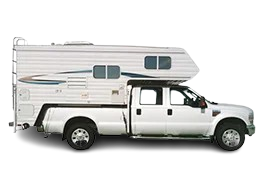
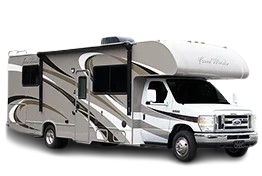
A wired backup camera normally sends video through a cable running from the camera to the display. On a small vehicle, that cable may be relatively short. On a truck, motorhome, or trailer, routing and protecting it can involve considerably more work.
A wireless backup camera conversion replaces this long video connection with a radio link. The existing camera continues capturing the rear view, while the transmitter and receiver carry the picture across the vehicle.
This distinction matters because the camera itself does not necessarily need replacing. If its video output matches the wireless transmitter’s input, it may remain part of the upgraded system. The same applies to the monitor, provided it accepts the receiver’s output.
Can Any Wired Backup Camera Be Converted?
Many wired backup cameras can be converted, but compatibility cannot be assumed. A wireless transmitter and receiver must work with the signals used by the existing equipment.
Backup cameras may use CVBS, AHD, TVI, CVI, or a proprietary video connection. A transmitter designed for one format may not accept another. Resolution support also matters: a camera producing a higher-resolution signal will not automatically work with a module that supports only lower-resolution inputs.
The monitor creates another compatibility requirement. A receiver with an AHD output needs a display that accepts the relevant AHD signal. A matching plug alone does not prove that two devices can communicate.
Factory-installed cameras can be more complicated. Their video, power, and control functions may be integrated with the vehicle’s original electronics. These systems may require a dedicated interface, and some are unsuitable for a straightforward wireless conversion.
Does a Wireless Backup Camera Still Need Wiring?
Yes. In most conversions, “wireless” describes video transmission rather than the power supply.
The rear camera and transmitter need a suitable electrical supply near the back of the vehicle. The receiver and monitor also need power at the front. Short connections remain between the camera and transmitter, and between the receiver and display.
Power arrangements also affect when the picture becomes available. A camera powered only when reverse gear is selected generally operates differently from one supplied continuously for rear-view monitoring. Wireless conversion alone does not change that behavior.
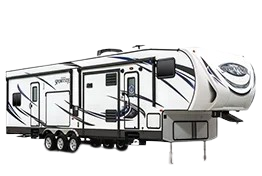
For trailers, this is especially relevant. Removing the video cable between the towing vehicle and trailer can simplify the connection, but the trailer-mounted camera and transmitter still require a dependable power source.
Will the Wireless Picture Be Clear and Reliable?
A compatible wireless system can deliver a useful rear-view image, but actual performance depends on more than the advertised transmission distance.
Metal bodywork, enclosed trailers, vehicle length, and antenna position can weaken the radio link. Nearby wireless equipment may also affect performance, particularly where devices share the same frequency band. A maximum range specification should therefore be considered alongside the conditions in which the system will operate.
Image resolution and transmission delay are separate concerns. A clear picture can still arrive slightly behind real-time movement. Drivers should also consider how quickly the system starts and reconnects when the camera receives power.
Wireless transmission does not improve the camera’s original image quality. A dirty lens, poor low-light performance, or an unsuitable viewing angle will remain a limitation after conversion.
When Does Converting to Wireless Make Sense?
Wireless conversion is particularly appealing when the existing camera and monitor still perform well, but the video cable causes practical problems.
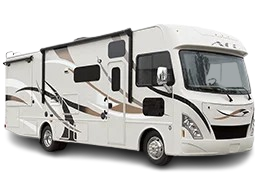
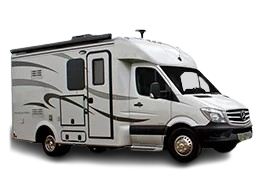
Long vehicles are a common example. Replacing a damaged cable through a motorhome or commercial vehicle can involve access behind panels, beneath the chassis, or through tightly routed spaces. A compatible wireless link may reduce that cable-routing work.
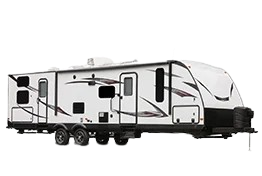
Trailers create another useful application because the camera and monitor sit on separate vehicle sections. Wireless video can reduce dependence on a physical video connection at the coupling point.
However, conversion is not automatically worthwhile for every vehicle. If a wired system already delivers a stable image and its cable is in good condition, the practical benefit may be limited. The decision should reflect the problem being solved and the expected operating conditions.
Where Do Wireless Transmitter and Receiver Boxes Fit In?
Dedicated transmitter and receiver boxes provide the bridge between existing wired equipment and wireless video transmission.
For example, the AOTOP HD waterproof vehicle wireless transmission receiver box supports AHD, TVI, CVI, and CVBS video inputs at the transmitter, with a 720p AHD output from the receiver. Its published specifications include DC 12–24V power and IP68 protection.
These specifications illustrate why compatibility matters on both sides of a conversion. Supporting the camera’s input format is only half the requirement; the existing monitor must also accept the receiver’s output. A conversion module should be assessed as part of the complete camera system.
Conclusion
You can convert a wired backup camera to wireless when the camera, transmitter, receiver, and monitor are compatible. The main benefit is replacing the long video cable while potentially retaining useful existing equipment.
The result still depends on reliable power, suitable video formats, and a radio link that performs consistently on the actual vehicle. For trucks, trailers, and motorhomes with difficult cable routes, wireless conversion can be a practical upgrade. Understanding those limits helps determine whether it will solve the real problem with your current backup camera system.