































H.264 video compression reduces the amount of data needed to store and transmit video while preserving useful image detail. Also known as Advanced Video Coding (AVC), it helps DVR systems balance recording quality, storage capacity, and bandwidth requirements.
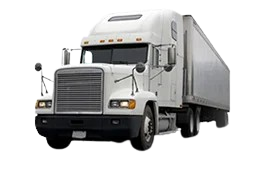
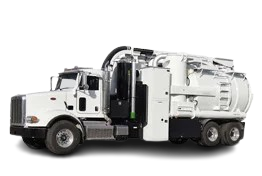
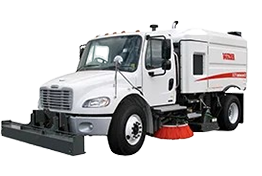
For commercial vehicles, that balance matters throughout the working day. Trucks, buses, and work vehicles may use several cameras to record different views during driving, reversing, and maneuvering. H.264 helps manage the resulting video data so recordings remain practical to store, retrieve, and review.
What is H.264 Video Compression?
H.264 is a video coding standard also called MPEG-4 Part 10 or AVC. It defines how compressed video is represented so compatible equipment can decode and play it. The International Telecommunication Union’s H.264 specification covers applications including video storage, broadcasting, streaming, and communication.
Video contains substantial repetition. In footage from a truck-mounted camera, consecutive frames may show similar road surfaces, vehicle bodywork, and background objects. Saving every frame independently would repeatedly store much of the same information.
H.264 reduces that repetition and encodes the remaining information efficiently. It is a compression standard, while formats such as MP4 are containers that package encoded video, audio, and related data.
How Does H.264 Video Compression Work?
H.264 uses prediction, transformation, quantization, and entropy coding to reduce the information needed to reconstruct video during playback.
Prediction Reduces Repeated Information
Prediction estimates image content using information available to the decoder. Intra prediction uses neighboring pixels within the same frame. Inter prediction uses previously decoded reference pictures.
For example, when a delivery truck passes a parked vehicle, that vehicle appears across several frames with changes in position and perspective. The encoder can describe the movement and remaining differences rather than repeatedly encoding its complete appearance.
This process makes use of similarities between images while retaining the information needed to reconstruct changes.
Transformation and Quantization Reduce Data
The difference between the predicted image and the actual image is called the residual. A mathematical transform converts residual information into coefficients that can be encoded efficiently.
Quantization then reduces the precision of those coefficients. This step lowers data requirements but also causes information loss in typical H.264 recording.
Stronger quantization generally produces smaller files, although fine textures may become softer and visible compression artifacts may appear. The encoder must balance those effects against the available bitrate.
Entropy Coding Packs the Remaining Information
Entropy coding represents the remaining values compactly without introducing additional image loss at this stage.
During playback, the decoder interprets the compressed data and reconstructs the pictures using prediction information and residual data. The resulting recording requires far less storage than uncompressed video, although the exact reduction depends on the scene and recording settings.
Why is H.264 Useful for Commercial Vehicle DVR Systems?
H.264 helps make continuous, multichannel recording practical within the storage limits of onboard equipment.
A commercial vehicle may have cameras covering the front, rear, and sides, depending on its application. Recording several channels throughout a shift generates substantial data. Efficient compression reduces the average storage required by each channel, allowing more footage to remain available on the same storage device.
This can support the review of reversing incidents, loading-area activity, or events reported after a vehicle returns to its depot. Smaller video files also make relevant clips easier to export and share.
Where a DVR supports network transmission, compression can reduce bandwidth demand. Remote access still depends on the equipment’s connectivity and software features.
What Affects H.264 Recording Quality?
H.264 recording quality depends on bitrate, scene complexity, encoder performance, and the original camera image.
Commercial vehicle footage can be demanding to compress. Road vibration, fast-moving traffic, changing light, rain, and nighttime noise introduce frequent changes. These scenes generally need more data than a stationary, well-lit view to preserve comparable detail.
Bitrate determines how much video data is produced each second. At otherwise similar settings, a higher bitrate generally preserves more information. An insufficient bitrate can blur moving objects or obscure small features.
Resolution alone therefore cannot guarantee useful footage. A 1080p recording may still lose detail through heavy compression, poor exposure, or a dirty camera lens. Evaluation should include representative driving and working conditions.
How Does H.264 Affect Recording Time?
Recording time depends mainly on average bitrate, the number of recorded channels, and usable storage capacity.
For example, one channel averaging 2 Mbps generates approximately 0.9 GB of video per hour, excluding audio and system overhead. Four channels at the same average bitrate generate approximately 3.6 GB per hour.
Variable bitrate recording can change data consumption as scene complexity changes. Retention estimates should therefore allow for actual operating conditions.
Where loop recording is enabled, older footage is typically overwritten as storage fills. Compression settings consequently influence how long recordings remain available before replacement. Frame rate, resolution, and bitrate should be configured together around the required detail and retention period.
H.264 Recording in AOTOP DVR Monitors
Our AOTOP DVR monitors use H.264 video compression to support efficient onboard recording. By managing video data requirements, H.264 helps make practical use of storage capacity while keeping footage available for review.
When configuring a vehicle recording system, matching the camera inputs, recording settings, and storage capacity to the application is essential. This helps ensure that footage captured during daily operation remains useful when an event needs a closer look.